


Summer heat and humidity feels like it gets more intense with every passing year. By July, Florida air conditioners rarely get a break. They run through hot afternoons, humid evenings, and long stretches when opening a window isn’t practical.
Constant cooling may keep your home or workplace comfortable, but it doesn’t automatically mean the air is clean or healthy. An HVAC system can move air throughout a building without necessarily improving its quality.
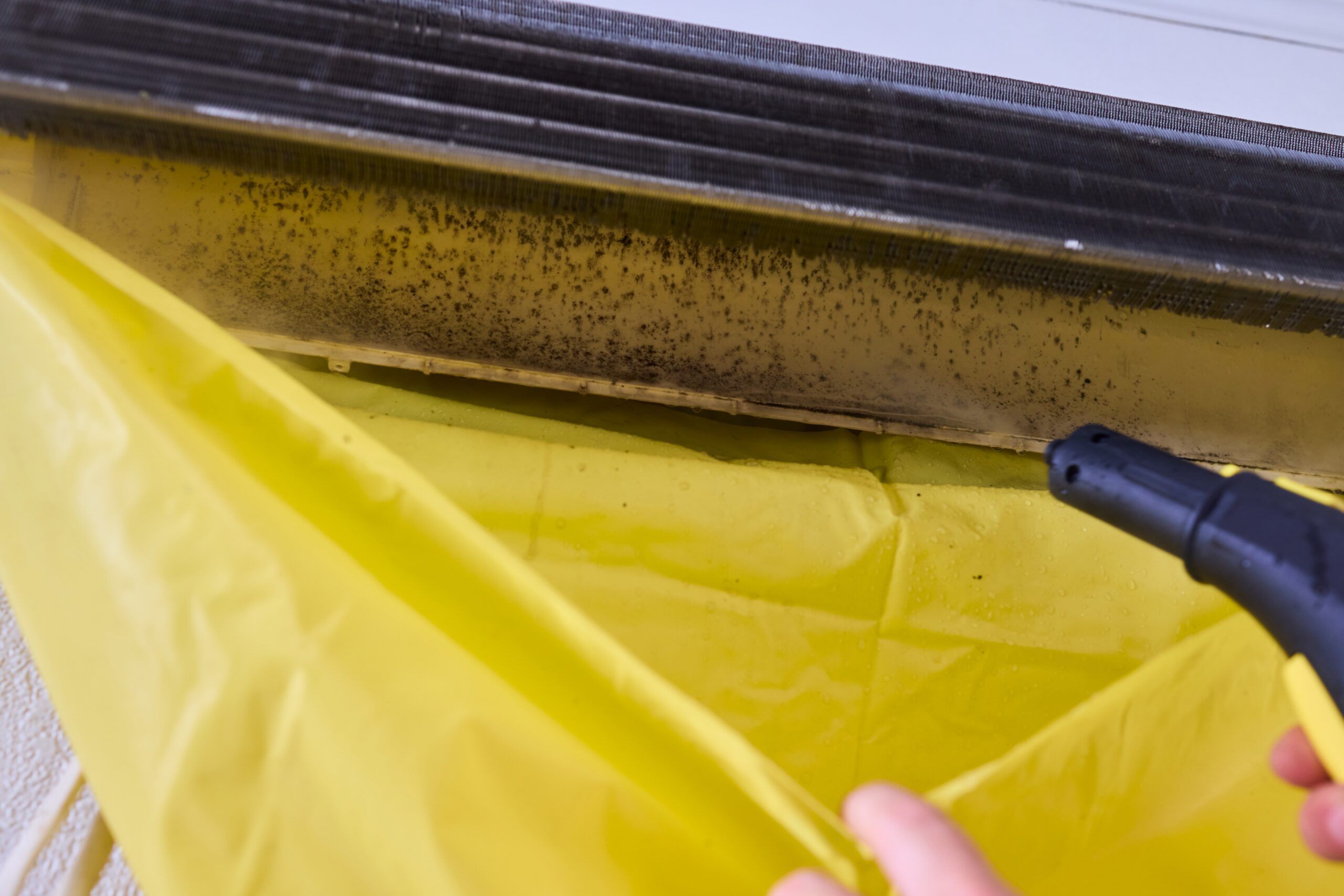
In fact, Florida’s summer conditions can create two distinct indoor air quality concerns. Moisture may accumulate inside or around HVAC components, creating conditions that support mold and bacterial growth. At the same time, the system may continuously recirculate dust, allergens, mold spores, and other pollutants that are already indoors.
Your AC may be doing its job according to the thermostat, but the bigger question is what it’s circulating while it runs.
Florida Summer Humidity Changes the Job Your AC Has to Do
Your air conditioner has two closely related jobs: cooling the air and removing moisture from it. A room can feel cool while still containing too much humidity.
The U.S. Environmental Protection Agency recommends keeping indoor relative humidity below 60 percent and ideally between 30 and 50 percent. During a Florida summer, indoor humidity may climb above 60 percent even while the air conditioner is running, especially when the system or building isn’t controlling moisture effectively.
Possible causes include:
- An improperly sized HVAC system
- Dirty cooling coils
- A clogged condensate drain
- Damaged or inadequate duct insulation
- Air leakage around ducts or equipment
- Improper thermostat fan settings
- Ventilation or pressure problems
- A moisture load the system can’t manage
Indoor readings in the 60 to 70 percent range shouldn’t simply be dismissed as “Florida weather.” Air conditioning is supposed to help remove moisture. If a building feels cool but clammy, or humidity remains elevated for long periods, something may need attention.
How AC Systems Contribute to Poor Indoor Air Quality
Air conditioners don’t automatically cause indoor air quality problems. Concerns develop when moisture, airborne contaminants, filtration issues, and inadequate ventilation occur together.
Condensation Can Collect Where It Shouldn’t
Air conditioning naturally creates condensation as warm, humid air passes over a cold cooling coil. That moisture should collect in a drain pan and leave the building through a condensate line.
Problems can develop when the drain pan doesn’t empty correctly, the condensate line becomes blocked, insulation is damaged, or humid air reaches cold duct surfaces. Moisture may then remain inside or around the HVAC system.
According to the EPA, poorly maintained condensate pans can become reservoirs for mold and bacteria. Dust and debris inside the system can provide additional material for microbial growth when moisture is present.
The risk isn’t limited to visible standing water. Repeated condensation on ductwork, insulation, vents, or HVAC components may create localized damp areas that are easy to overlook.
The System Can Redistribute Existing Contaminants
Most residential HVAC systems pull air through return vents, pass it through a filter, and send it back into occupied rooms. This process helps control temperature, but it doesn’t necessarily replace stale indoor air with fresh outdoor air.
If dust, pet dander, pollen, mold spores, or other particles are already present, the system may continue circulating them.
Filters can capture some airborne particles, but their effectiveness depends on several factors:
- The filter’s efficiency rating
- Whether it fits properly
- How frequently it’s replaced
- Whether air is leaking around it
- Whether the system can safely accommodate a higher-efficiency filter
A dirty or poorly fitted filter may allow more particles to move through the system. Even a high-quality filter can’t correct a moisture problem, contaminated HVAC component, or pollutant source elsewhere in the building.
Cooling Isn’t the Same as Ventilation
A cool room can still contain stale or polluted air.
Most home air-conditioning systems recirculate indoor air rather than continuously bringing in fresh outdoor air. Without enough controlled ventilation, contaminants from cleaning products, building materials, pets, cooking, dust, and other indoor sources may accumulate.
Opening windows isn’t always the solution in Florida. Outdoor humidity can add more moisture to the building, and outdoor air quality may not always be ideal.
The goal is controlled ventilation paired with effective filtration and moisture management, not uncontrolled humid air entering through open windows, leaks, or poorly sealed ducts.
Signs Your HVAC May Be Part of the Problem
HVAC-related indoor air quality problems aren’t always visible. The first clues may be changes in how the building smells, feels, or affects its occupants.
Signs worth investigating include:
- A musty odor that becomes stronger when the AC turns on
- Condensation near vents, air handlers, or ductwork
- Indoor humidity that repeatedly stays above 60 percent
- Dust that quickly returns after cleaning
- Rooms that feel cool but clammy
- Clogged condensate lines or water in the drain pan
- Allergy-like symptoms that become worse indoors
- Recurring coughing, congestion, wheezing, or eye irritation
- Symptoms that improve after leaving the building
These signs don’t prove that mold is present or that the HVAC system is the only cause. They indicate that a closer investigation may be appropriate.
Damp indoor environments have been associated with respiratory symptoms, allergic reactions, and the development or worsening of asthma in some individuals. Anyone experiencing persistent or severe symptoms should also speak with a qualified healthcare provider.
Myth vs. Fact: Constant AC Means Cleaner Air
Myth: If the AC runs constantly, the air must be getting cleaner.
Fact: Constant airflow isn’t the same as fresh-air exchange or effective contaminant removal.
An air conditioner primarily cools the air and removes moisture. It may also filter certain particles, but most systems continue recirculating indoor air.
If the filter is dirty, poorly fitted, or unable to capture smaller particles, contaminants may remain in circulation. If HVAC components are damp or contaminated, airflow may also distribute particles from those areas throughout the building.
Long operating cycles aren’t automatically a problem. Some properly designed variable-speed systems run for extended periods at lower output to improve comfort and humidity control.
Runtime alone isn’t a diagnosis. What matters is whether the system is controlling moisture, draining properly, filtering the air effectively, and circulating air through clean components.
Can Running Your AC Constantly Make Indoor Air Quality Worse?
Yes, but not simply because it runs for long periods.
A clean, properly sized, and well-maintained air-conditioning system generally helps control indoor temperature and humidity. Continuous operation may contribute to poor indoor air quality when:
- Moisture is accumulating inside the system
- Mold or bacteria are growing on HVAC components
- The filter is dirty, damaged, or poorly fitted
- Condensate isn’t draining correctly
- Duct insulation is wet or deteriorating
- Indoor contaminants are accumulating
- The building lacks adequate controlled ventilation
The more useful question isn’t just, “How long is my AC running?”, it’s, “What is my AC circulating, and is the system removing enough moisture?”
What an Indoor Air Quality Assessment Can Reveal
Changing an air filter is an important maintenance step, but an indoor air quality assessment looks beyond the filter and thermostat.
Depending on the property and reported concerns, an assessment may include:
- Measuring temperature and relative humidity
- Inspecting accessible air handlers, coils, and drain pans
- Examining accessible ductwork and insulation
- Evaluating musty odors and visible condensation
- Reviewing filtration, airflow, and ventilation
- Looking for damp or water-damaged materials
- Conducting targeted sampling when observations indicate that testing is appropriate
- Recommending corrective actions based on the source of the problem
At Luce Air Quality Environmental Health & Safety, the goal is to investigate before jumping to conclusions or recommending treatment.
A musty odor, elevated humidity reading, or dirty vent is a signal, not a complete diagnosis. A professional assessment can help determine whether the HVAC system is contributing to indoor air quality concerns and what steps may be appropriate.
Schedule an Indoor Air Quality or Healthy Building Assessment
Your AC may be working overtime, but indoor comfort and healthy indoor air aren’t always the same thing.
If your home, office, or commercial property has recurring summer odors, high humidity, respiratory irritation, or allergy-like symptoms, an assessment can help identify whether the HVAC system is contributing to the problem rather than preventing it.
Contact Luce Air Quality Environmental Health & Safety to schedule an indoor air quality or Healthy Building Assessment and receive clear, evidence-based guidance for your space.
Frequently Asked Questions
Can an air conditioner cause mold in ductwork?
An air conditioner doesn’t directly cause mold. However, condensation can support mold growth when ductwork, insulation, drain pans, coils, or other HVAC components remain damp and contain dust or organic debris.
What indoor humidity level helps reduce mold risk?
The EPA recommends keeping indoor relative humidity below 60 percent and ideally between 30 and 50 percent. Persistent readings above 60 percent may indicate that the building or HVAC system isn’t controlling moisture effectively.
Does central air bring fresh air into a home?
Most residential central air-conditioning systems primarily recirculate indoor air. Unless the system includes dedicated mechanical ventilation, it may bring in little or no controlled outdoor air.
Can my HVAC system make allergy symptoms worse?
An HVAC system may contribute to symptoms if it’s circulating dust, pollen, pet dander, mold spores, or other particles. Moisture problems, contaminated components, poor filtration, and inadequate ventilation may also affect indoor air quality.
Should I have my air ducts cleaned?
Routine duct cleaning isn’t necessary in every building. An inspection can help determine whether there is visible contamination, excessive debris, moisture, damaged insulation, or another condition that requires corrective action.