


September brings fuller classrooms, busier offices and a return to normal operating schedules across Florida. Building owners and facility managers are reviewing maintenance records, confirming required inspections and preparing HVAC equipment for heavier occupancy.
All of that matters, but it doesn’t answer a different question: What is actually in the air occupants are breathing?
A passed inspection confirms that the items reviewed met the applicable criteria at that time. It doesn’t tell you everything about the building’s indoor environment. Structural reviews, fire and life-safety inspections, and routine HVAC maintenance each serve a specific purpose. An indoor air quality assessment examines another layer: how moisture, ventilation, mechanical systems and pollutant sources interact within occupied spaces.
That distinction matters in Florida, where heat and humidity can amplify moisture-management challenges. For facility teams, a Florida indoor air quality inspection focused on healthy building performance can answer questions that routine compliance and maintenance checks were never designed to address.
Does a building inspection confirm indoor air quality is safe?
No. A standard building inspection does not, by itself, confirm that indoor air quality is safe or healthy. Depending on its scope, it may assess structural integrity, code compliance, life-safety systems or mechanical equipment. It generally does not collect and interpret air samples, investigate mold spores, characterize particulate levels or evaluate hidden dampness.
Indoor conditions can change with occupancy, outdoor-air intake, cleaning, renovations, water intrusion, temperature and humidity. A code-compliant building can still have poor ventilation in occupied areas, concealed moisture or a contaminant source that requires investigation.
What a Building Inspection Actually Checks
The word “inspection” can describe several different activities, so it is important to read the report’s stated scope carefully.
- Building or structural inspections evaluate specified construction and safety requirements. Depending on the inspection, that may include structural components, elements of the building envelope, plumbing, electrical work or mechanical installations.
- Fire and life-safety inspections focus on issues such as exits, alarms, suppression systems and other measures intended to protect occupants during an emergency.
- HVAC maintenance inspections typically assess whether equipment is operating, filters and components are being serviced, and obvious mechanical deficiencies need attention.
All three provide valuable information, but only within their defined scope. A functional air handler can move and condition air while moisture, dirt or microbial growth remains elsewhere in the system or building. The EPA’s guidance for office buildings notes that HVAC systems influence how pollutants are distributed and removed and can sometimes become pollutant sources themselves.
What It Doesn’t Cover
A typical code, fire or mechanical inspection is not a substitute for a commercial building IAQ assessment in Florida. Unless indoor environmental testing is explicitly included, the inspection generally will not determine:
- Whether airborne particles or other contaminants are present in the areas occupants use
- Whether mold spores indoors differ meaningfully from outdoor or control samples
- Whether dampness is concealed in porous building materials or behind finishes
- Whether temperature, relative humidity and moisture conditions are supporting microbial growth
- Whether ventilation is effectively serving the building’s current use and occupancy
- Where a suspected contaminant originates or how it may be moving through the building
Routine HVAC service also does not automatically identify microbial growth within ductwork, drain pans or concealed components. Mechanical function and the environmental condition of the air stream are separate questions.
The EPA identifies pollutant sources, inadequate ventilation, excess moisture, high temperatures and humidity as important contributors to indoor air problems. These conditions require an investigation designed around IAQ, not an assumption based on an unrelated pass or approval.
How a Compliant Building Can Still Have an IAQ Problem
Consider an office that operated on a reduced summer schedule. Cooling setpoints changed, outdoor-air delivery was reduced and a slow condensate leak developed above a ceiling tile. The HVAC equipment may still pass a routine service check, yet moisture can remain concealed. Full occupancy may also change ventilation demand and air movement.
Similar gaps can follow roof leaks, plumbing events, renovations, flooring installation, intensive cleaning or partial occupancy. That doesn’t necessarily mean a previous inspector missed something. It means each inspection answers a defined set of questions.
For moisture and mold, visual context is especially important. NIOSH provides a systematic dampness and mold assessment tool for schools and general buildings, while the EPA emphasizes professional judgment when sampling is used. There are no federal threshold limits for airborne mold or mold spores, so results must be interpreted with moisture measurements, observations, building history and appropriate comparison data.
Building Inspection vs. IAQ Assessment: Myth vs. Fact
| Myth | Fact |
| “The building passed, so the air passed too.” | A passing result applies to the defined scope of that inspection. IAQ requires its own evaluation. |
| “The HVAC system runs properly, so the ducts and air stream must be clean.” | Mechanical operation does not, by itself, rule out moisture, microbial growth or particulate contamination. |
| “If there were an air-quality problem, we would see or smell it.” | Moisture and contaminant pathways can be concealed and may not create an obvious odor. |
| “One air-sample number tells us whether the building is safe.” | Sampling is one tool. Findings require professional interpretation, and the EPA has not established a federal airborne mold limit. |
Identify, Evaluate, Control: A Better Facilities Framework
LAQ Environmental Health & Safety approaches indoor environmental questions through a practical scientific framework: identify, evaluate and control.
Identify. Begin with the building, not a predetermined conclusion. Look for moisture sources, maintenance concerns, exterior-envelope vulnerabilities, plumbing issues and conditions within visible HVAC components. Document findings and consider how air and moisture may travel.
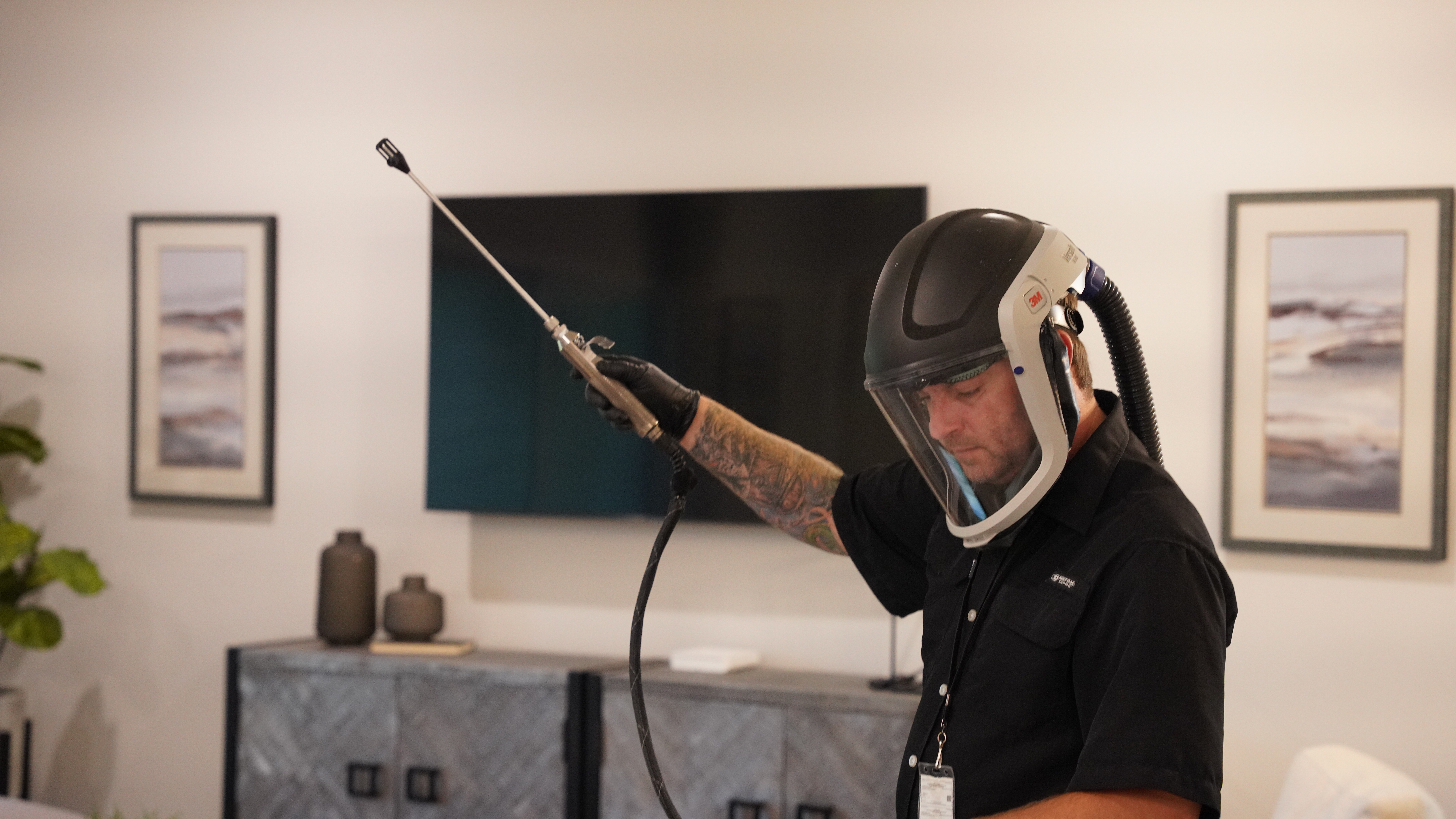
Evaluate. Use measurements and sampling that fit the investigation. LAQ’s assessment can include moisture measurements, psychrometric surveys, visual reviews of mechanical systems and exterior assemblies, air-quality samples, site plans and photo documentation. The findings are interpreted together rather than treated as isolated readings.
Control. Translate findings into priorities. LAQ provides a detailed final report summarizing observations and recommending maintenance or remediation when appropriate. This gives facility teams a defined basis for corrective action, contractor scopes and follow-up decisions.
This process is both preventive and investigative. It can identify conditions that deserve attention before they develop into more disruptive building problems.
Use Fall Re-Occupancy as a Baseline Opportunity
Before shared facilities return to full use, look beyond inspection stickers. Review summer leaks, drain-pan problems, envelope repairs, renovations, new furnishings and HVAC schedule changes. Confirm that repurposed rooms receive appropriate ventilation, and document known moisture events even if surfaces appear dry.
An IAQ baseline provides building-specific evidence and a written record of conditions. For organizations managing multiple properties, annual or semiannual Healthy Building Checkups can support consistency over time.
A passed inspection is good news. Just remember that questions beyond its scope need their own assessment.
Before fall occupancy reaches its peak, schedule an assessment with LAQ Environmental Health & Safety. LAQ can help you identify concerns, evaluate conditions and develop practical recommendations for a healthier indoor environment.