

September marks the climatological peak of the Atlantic hurricane season. According to the National Hurricane Center, Atlantic tropical cyclone activity typically peaks around September 10, with most activity occurring between mid-August and mid-October.
For Florida property owners, the concern doesn’t end when the wind and rain stop. Storm-driven water can enter through damaged roofing, flashing, soffits, windows, doors, and exterior walls. Once inside, it may continue moving through the building long after exposed surfaces appear dry.
That is what makes hidden water damage after a storm in Florida so difficult to evaluate. A dry-looking wall doesn’t necessarily mean the insulation, framing, subfloor, or nearby HVAC components are dry. Before anyone can determine what should be dried, removed, or repaired, they need to understand where the water traveled.
How Does Water Damage Spread Inside a Building After a Storm?
Water moves through a building by gravity, air pressure, and capillary action, commonly called wicking. Its path depends on where the building envelope failed, how much water entered, and which materials were exposed.
Here is the short answer:
- Floodwater and storm-driven rain can move through porous materials before visible damage appears. Drywall may wick water upward from the floor, while insulation inside a wall cavity can retain moisture out of sight.
- Wet drywall, wood, insulation, flooring, and other porous materials can support mold growth. The EPA recommends drying water-damaged materials within 24 to 48 hours to help prevent that growth.
- The Florida Department of Health identifies stormwater, storm surge, and leaks through roofs, walls, and floors as potential sources of indoor moisture.
- An independent water damage investigation can document moisture levels inside walls, floors, and other structural materials that a surface inspection cannot reliably evaluate.
No two buildings experience water intrusion in exactly the same way, but the following sequence illustrates a common post-storm pathway.
The Hidden Water Damage Timeline
1. Water Breaches the Roof or Exterior
High winds can damage shingles, flashing, soffits, siding, seals, and other parts of the building envelope. Even a small opening may allow wind-driven rain to enter an attic, ceiling assembly, or exterior wall.
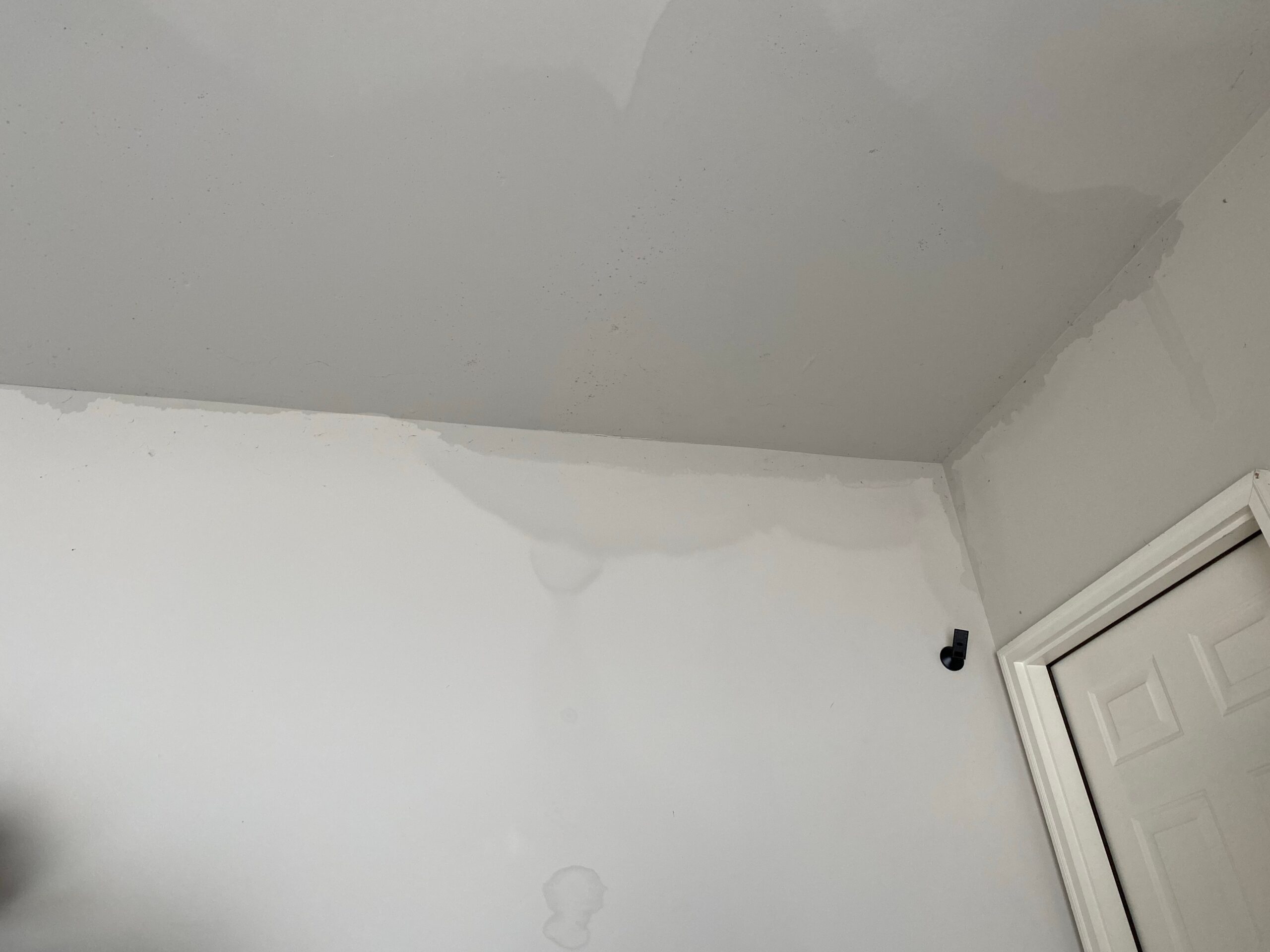
The first visible clue might be a ceiling stain or damp area near a window. By then, however, the water may have traveled several feet from its original entry point.
2. Moisture Enters the Wall Cavity
Once water moves behind a finished surface, it can wet sheathing, wood framing, drywall backing, and insulation. Insulation may hold moisture against surrounding materials, while enclosed wall cavities receive little airflow.
The EPA notes that wall cavities are among the most difficult areas of a building to dry. Paint, wallpaper, paneling, and other finishes can slow evaporation, leaving the inside of the wall damp after the visible surface feels dry.
3. Water Reaches the Floor and Subfloor
Water moving down a wall can collect around base plates, behind baseboards, and along the edge of the flooring system. Floodwater can also move in the opposite direction, wicking upward into drywall from the bottom.
Moisture may spread beneath carpet, laminate, vinyl, tile, or wood flooring and soak into the subfloor. Because finished flooring covers these materials, swelling, loose flooring, discoloration, and odors may take time to appear.
4. HVAC Components Become Part of the Investigation
Storm water doesn’t always reach an HVAC system through the same path. However, air handlers, ducts, insulation, return openings, and drain pans can be exposed when located in a wet attic, ceiling cavity, mechanical closet, crawlspace, or flooded area.
If contamination is known or suspected near HVAC components, the system should be professionally evaluated. The EPA advises against operating an HVAC system suspected of mold contamination, since doing so could spread contaminants to other parts of the building.
Why Surface Dry Is Not the Same as Structurally Dry
The exposed face of a material often dries faster than the areas behind or beneath it. A painted wall may feel dry while the paper backing remains damp. Carpet fibers can dry before the pad underneath them. Tile may look unaffected even though water has reached the subfloor.
Touch and appearance only reveal what is happening at the surface. They cannot confirm moisture conditions inside a wall assembly or beneath finished flooring.
Investigators can use moisture meters to evaluate materials such as wallboard, wood, carpet, brick, and concrete. Depending on the property and suspected water pathway, an investigation may also involve thermal imaging, humidity measurements, visual inspection, and limited-access observations.
The goal isn’t simply to find a damp spot. It is to determine the source, extent, and boundaries of the intrusion so that the next steps are based on evidence.
The 48-Hour Window That Determines How Bad It Gets
The first 24 to 48 hours after water intrusion are critical because mold can begin growing on wet building materials during this period. Drywall paper, wood, dust, carpet backing, and other organic materials can provide nutrients when enough moisture is present.
This doesn’t mean every wet building will develop a major mold problem after exactly 48 hours. Temperature, humidity, material type, contamination level, and drying conditions all affect what happens. The 24-to-48-hour guidance is best understood as a response window, not a guaranteed countdown.
It is also important to distinguish drying the room from drying the building. Fans may improve conditions at exposed surfaces while leaving moisture trapped in insulation or enclosed cavities. Fans also shouldn’t be used indiscriminately when floodwater may be contaminated or mold growth is already present, as air movement can spread contaminants.
Why an Independent Investigation Should Come First
After a storm, it can be tempting to move directly from visible damage to demolition. The problem is that visible damage may not show the full affected area or reveal where the water originally entered.
An independent water damage investigation can help answer several important questions:
- Where did the water enter?
- Which materials are still wet?
- How far did the moisture travel?
- Are wall cavities, flooring systems, or HVAC components involved?
- Is there evidence of microbial growth or contaminated water?
- What areas should a remediation contractor address?
An investigation doesn’t automatically require mold sampling. It begins by evaluating the water source, moisture conditions, affected materials, and extent of the damage. Additional testing may be recommended when the findings or type of water intrusion justify it.
LAQ Environmental Health & Safety provides water damage investigation and assessment, not remediation. This separation allows LAQ to focus on documenting conditions, interpreting the findings, and developing objective recommendations rather than performing the corrective work being evaluated.
Our Water Damage investigation may also include bacteria testing when contaminated water is a concern, recommendations based on the investigation, and post-remediation verification to determine whether affected areas have been properly dried and sanitized.
An investigation should be scheduled as early as possible, ideally before demolition, disposal of materials, or approval of a remediation scope. Emergency safety measures shouldn’t be delayed, however. Active water should be stopped when it is safe to do so, electrical and structural hazards should be addressed, and temporary protection such as roof tarping may need to begin immediately.
Get Answers Before Hidden Moisture Becomes a Larger Problem
If your Florida home or commercial property experienced roof leakage, flooding, storm-driven rain, or another form of water intrusion, don’t rely on appearance alone to determine whether the building is dry.
Schedule an independent water damage investigation with LAQ Environmental Health & Safety before authorizing extensive cleanup or remediation. A professional assessment can identify where moisture traveled, document the affected materials, and provide a clearer foundation for the work that follows.