


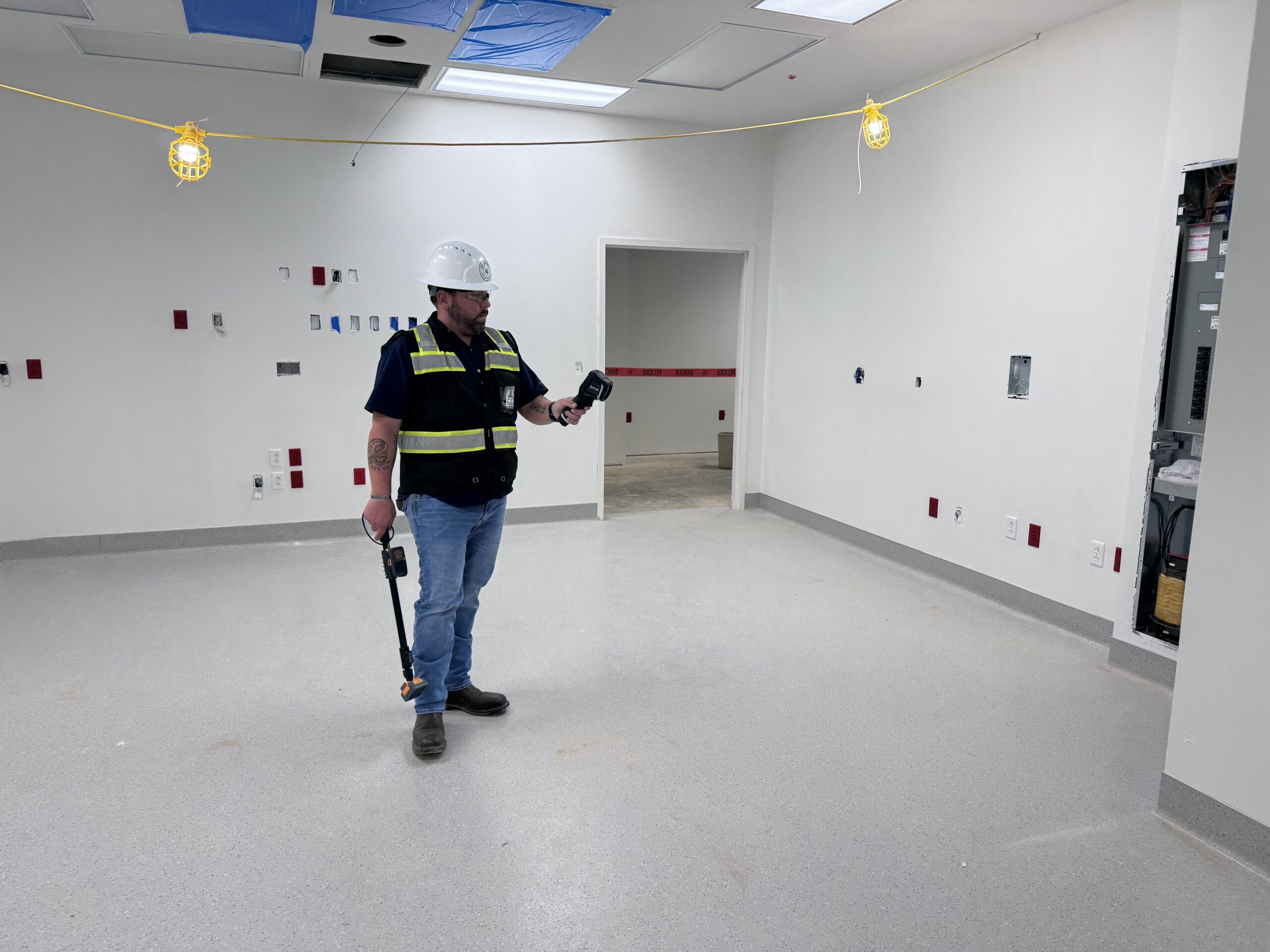
February is when many organizations begin budgeting and scheduling spring and summer capital improvements. From classroom upgrades and office remodels to HVAC replacements and tenant improvements, renovation season moves quickly.
But before demolition begins, facility managers should pause and ask a critical question: What environmental hazards could be disturbed during this project?
Without proper pre-renovation environmental testing, hidden contaminants can be released into occupied spaces, causing delays, regulatory violations, costly change orders, and potential health risks. Proactive planning protects your timeline, your occupants, and your liability exposure.
Why Renovations Can Release Hidden Contaminants
Many commercial and institutional buildings (especially those constructed before the 1990s) contain materials that were once considered standard but are now regulated.
When walls are opened, ceilings removed, or flooring replaced, previously undisturbed materials can release contaminants into the air or surrounding areas. Even minor projects such as lighting retrofits or plumbing upgrades can trigger compliance requirements.
The most common issues include:
- Asbestos-containing materials (ACMs) in flooring, ceiling tiles, insulation, fireproofing, and pipe wrap
- Lead-based coatings on painted surfaces
- Hidden mold growth behind walls or above ceiling tiles
- Accumulated dust and particulate matter in ductwork and cavities
- Contaminated debris spreading through HVAC systems
An asbestos survey before renovation is often legally required in many jurisdictions, Jacksonville included. Failing to conduct one can stop a project immediately once materials are disturbed.
Environmental Tests to Schedule Before Work Begins
Planning ahead allows facility managers to build environmental compliance directly into the renovation schedule.
1. Asbestos Survey Before Renovation
A comprehensive inspection identifies suspect materials and includes laboratory sampling. The results determine whether abatement is required prior to demolition.
2. Lead-Based Paint Assessment
Especially important in schools, childcare facilities, and older commercial buildings. Testing confirms whether coatings must be handled under lead-safe work practices.
3. Mold & Moisture Investigation
Leaks behind walls or roof issues may not be visible until demolition begins. Pre-renovation moisture mapping and mold sampling prevent surprise remediation costs mid-project.
4. Indoor Air Quality & Dust Baseline Testing
Establishing pre-construction conditions supports occupant protection plans and post-project clearance testing.
5. Comprehensive Building Hazard Assessment
A full building hazard assessment evaluates environmental risks across multiple categories—ensuring no regulated material is overlooked.
Do I need environmental testing before renovating a commercial building?
In most cases, yes—especially if the building was constructed before modern environmental regulations were enacted.
Even when not explicitly mandated, conducting pre-renovation environmental testing is considered a best practice for risk management and regulatory compliance.
Common Hazards Found During Renovations
- Asbestos in older materials
- Lead-based coatings
- Mold behind walls or ceilings
- Dust & particulate spread
- HVAC contamination risks
Renovation activities such as sanding, cutting, drilling, and demolition can aerosolize these materials, creating exposure risks for construction crews and building occupants.
Schools, healthcare facilities, municipal buildings, and multi-tenant commercial properties face heightened scrutiny and liability if environmental safeguards are overlooked.
How Early Assessments Save Time and Money
Some facility managers worry that testing adds cost to a project. In reality, the opposite is often true.
1. Prevents Project Delays
Discovering asbestos or mold after demolition has begun can halt construction until emergency remediation is completed. Advance testing keeps the schedule intact.
2. Reduces Change Orders
Environmental surprises often trigger unplanned scope increases. Clear data upfront allows accurate budgeting.
3. Protects Occupant Health
Renovations in occupied buildings require careful containment planning. Testing informs engineering controls, work sequencing, and communication strategies.
4. Limits Regulatory Exposure
Failure to conduct an asbestos survey before renovation can lead to fines and stop-work orders. Documented compliance demonstrates due diligence.
5. Supports Contractor Coordination
When contractors understand environmental conditions before bidding, pricing is more accurate, and safer work practices are integrated from day one.
Why Partner with LAQ EHS Before Construction Begins
Renovation projects move fast, but environmental compliance should never be an afterthought.
LAQ EHS provides:
- Comprehensive pre-renovation environmental testing
- Certified asbestos survey before renovation
- Detailed building hazard assessment
- Mold inspections and laboratory sampling
- Indoor air quality testing and dust monitoring
- Clear, compliance-focused action plans
Our team works alongside facility managers, property managers, school administrators, and commercial building owners to ensure environmental risks are identified and addressed before demolition begins.
The result? Safer projects. Predictable timelines. Reduced liability.
Plan Smart Before You Renovate
If your organization is planning upgrades this spring or summer, February is the ideal time to schedule environmental evaluations.
Renovations don’t just change aesthetics; they can disturb materials hidden for decades. A proactive assessment protects occupants, contractors, and your organization’s reputation.
Before construction starts, make sure you know what’s behind the walls.