


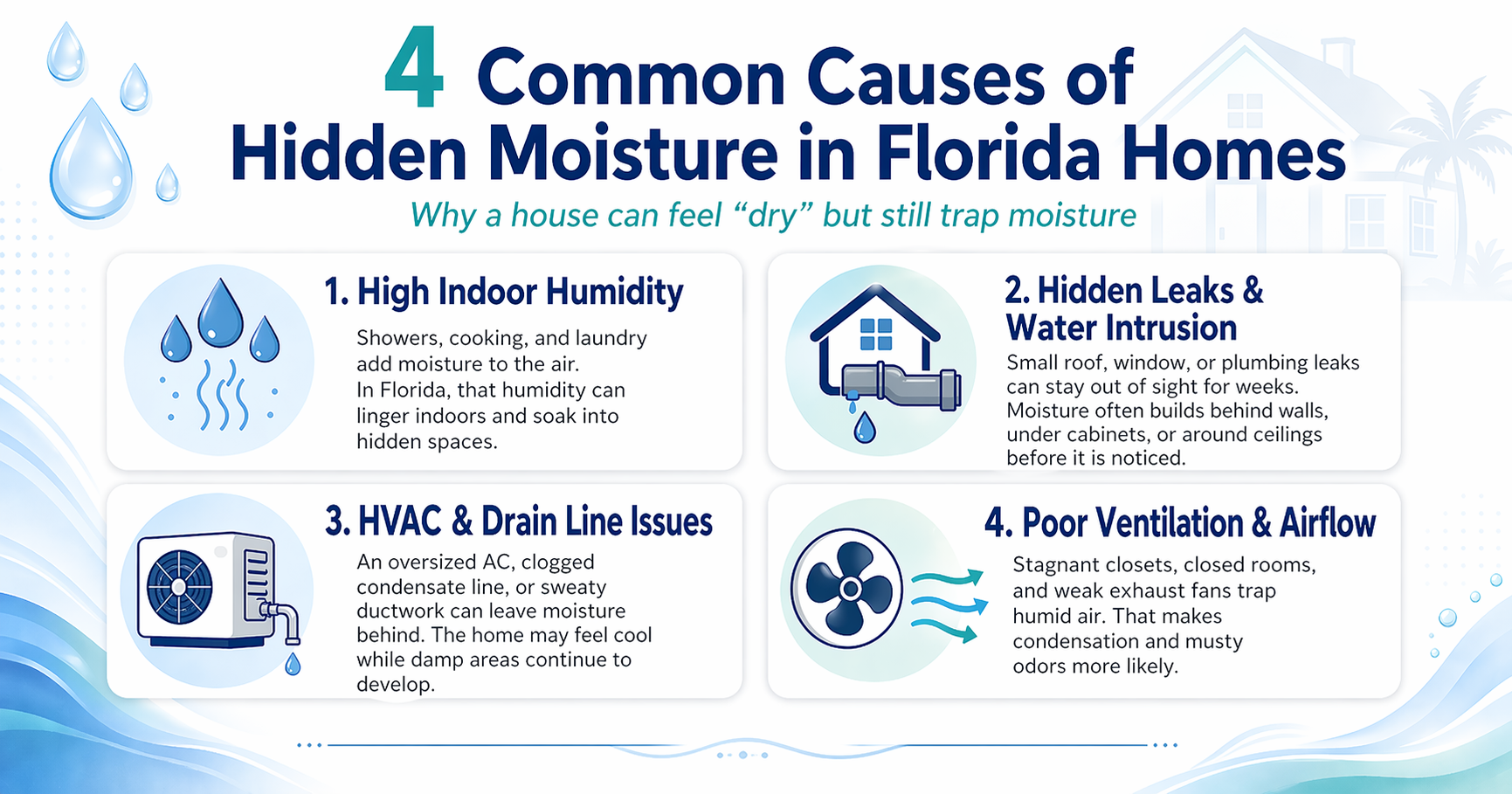
A Florida home can feel cool, comfortable, or even “dry” and still have a serious moisture problem.
That happens because comfort and moisture are not the same thing. A house may feel better after the AC runs, but humidity can stay trapped in walls, vents, closets, insulation, or other low-airflow areas.
Can a Florida home feel dry and still have hidden moisture?
Yes. Cooling can reduce discomfort before the home has actually removed enough moisture from the air and building materials.
What causes condensation indoors?
Condensation forms when moist air touches a cooler surface, and the water vapor turns into liquid water.
Why is this a common problem in Florida?
Florida’s climate is warm and humid, and official climate summaries describe the state as exceptionally humid. That makes indoor humidity control more important, especially in air-conditioned homes.
Why This Happens in Florida Homes
Here in Florida, outdoor moisture loads are high for much of the year. When that moisture meets cool indoor surfaces, poor ventilation, or short AC runtimes, the result can be condensation, musty air, and hidden dampness.
This is why many indoor humidity problems Florida homeowners notice seem contradictory. The home feels cool, but the windows sweat, the closet smells musty, or one room always feels clammy.
A Florida home can feel dry while still holding hidden moisture because air conditioning can cool the space faster than the home removes humidity. Hidden moisture often builds when humid indoor or outdoor air reaches cool surfaces, stagnant rooms, ducts, or wall cavities. In Florida, that pattern is more common because warm, humid conditions and constant cooling make condensation and trapped moisture easier to create and harder to notice early.
If your house feels dry but smells musty, shows window sweating, or feels clammy in certain rooms, check humidity levels, airflow, leaks, and HVAC performance instead of relying on comfort alone.
The Hidden Science Behind It
A home does not have one single moisture condition everywhere. One room may feel fine while another area holds damp air or wet materials.
Moisture tends to collect where airflow is weak, surfaces are cool, or water intrusion is present. That includes supply vents, window edges, closets, wall cavities, crawlspaces, and areas around plumbing or roof leaks.
Air conditioning can hide the issue. ENERGY STAR notes that oversized systems can cool a space before they remove enough humidity, leaving the home feeling cool but still damp or clammy.
Here’s how this happens:
Humid outdoor air or indoor moisture sources
→ showers, cooking, laundry, leaks, crawlspaces, damp materials
AC cools the house
→ the room feels better fast
Moisture is still present
→ especially in walls, vents, closets, and low-airflow spaces
Moist air hits a cool surface
→ windows, metal vents, pipes, drywall, supply boots
Condensation forms
→ water droplets, damp spots, odors, staining
Moisture stays hidden
→ damage builds over time
That is the basic pattern behind a hidden moisture house problem. The home may feel dry to people while moisture is still active inside the building.
Common Condensation in Homes Causes
If you are looking up the causes of condensation in homes, these are the biggest ones to consider first:
- High indoor humidity
- Cool window glass or metal surfaces
- Bathroom exhaust that is weak or unused
- Cooking steam that stays indoors
- Laundry moisture
- Plumbing leaks behind walls
- Roof or window intrusion
- Damp crawlspaces
- Short-cycling or oversized AC systems
- Poor airflow in closed rooms
- Dirty drain pans or blocked condensate lines
These factors often overlap. One leak plus high humidity plus weak airflow can create a bigger moisture problem than homeowners expect.
Signs of a Hidden Moisture House Problem
Many Florida moisture issues start quietly.
Look for these warning signs:
- Condensation on windows, walls, or pipes
- Musty odors
- A clammy room, even with the AC on
- Bubbling paint or soft drywall
- Damp closets
- Stains around vents or ceilings
- Warped trim or swollen baseboards
- Repeating mildew spots
- Allergy irritation that feels worse indoors
- Humidity readings that stay high
EPA guidance specifically notes that condensation on windows, walls, or pipes can indicate high indoor humidity.
Why Florida AC Systems Sometimes Mask the Problem
In Florida, homeowners often think, “The AC is running, so humidity must be under control.”
That is not always true. An oversized system or one that cycles too quickly may cool the home without sufficient moisture removal, leaving indoor air feeling cool but still damp.
This is one reason local moisture complaints often show up as mixed comfort symptoms. One family member says the house feels fine, while another notices a sticky guest room, damp closet, or musty hallway.
What Florida Homeowners Should Check First
Start with the basics before the damage spreads.
Use a hygrometer in more than one room and compare the readings over a few days. EPA guidance says indoor humidity should be kept below 60%, ideally around 30% to 50%.
Then check these common trouble spots:
- Bathrooms without strong exhaust
- Kitchen cooking moisture
- Laundry areas
- Window condensation
- AC drain lines and pans
- Supply vents with staining
- Crawlspace or attic moisture
- Exterior wall leaks
- Closed rooms with stale air
- Musty closets or storage spaces
If you find wet materials, act quickly. EPA guidance says drying wet areas within 24 to 48 hours can often help prevent mold growth.
What Actually Solves the Problem
Moisture problems are usually not fixed by covering odors or lowering the thermostat.
The real solution is to find the moisture source, reduce humidity, improve airflow, and stop condensation from repeating. EPA guidance consistently centers on moisture control as the main way to prevent mold and moisture-related damage.
The most effective next steps usually include:
- Repairing leaks quickly
- Improving bathroom and kitchen exhaust
- Cleaning drain pans and condensate lines
- Checking HVAC sizing and runtime
- Addressing damp crawlspaces or infiltration
- Increasing airflow in stagnant rooms
- Measuring humidity instead of guessing
- Using dehumidification where needed
- Inspecting hidden moisture around walls and vents
In Florida, a home that feels dry is not always a dry home.
If you notice musty smells, window sweating, damp closets, or recurring clammy rooms, the issue may be hidden moisture rather than simple comfort. That is when a moisture-focused indoor air quality assessment becomes more useful than guesswork.
FAQ
What are the most common indoor humidity problems Florida homeowners face?
The most common issues are window condensation, musty odors, clammy rooms, damp closets, hidden leaks, and HVAC systems that cool without enough dehumidification. Florida’s humid conditions make all of these more likely.
What are the top causes of condensation in homes?
The main causes are humid air, cool surfaces, poor ventilation, hidden leaks, and HVAC performance problems. Condensation is especially common when moist air touches cool windows, pipes, vents, or walls.
How do I know if I have a hidden moisture house issue?
Signs include musty smells, visible condensation, staining near vents, damp closets, warped trim, and rooms that feel clammy even when the AC is on. Those symptoms often appear before major visible damage does.
Can air conditioning make a house feel dry without fixing the humidity?
Yes. ENERGY STAR notes that an oversized air conditioner can cool the space before it removes enough humidity, leaving cool but damp conditions behind.
What indoor humidity level is too high?
EPA guidance recommends keeping indoor humidity below 60%, ideally between 30% and 50%. If your readings stay above that range, the risk of condensation and moisture problems increases.
Why does my Florida house smell musty even when it feels cool?
Because cool air does not always mean dry materials. Moisture can stay trapped in walls, insulation, vents, closets, or crawlspace-connected areas even when the temperature feels comfortable.
Cool Does NOT Equal Dry
A cool house is not always a dry house.
For Florida homeowners, hidden moisture often shows up first as condensation, odor, or room-to-room comfort differences. When that happens, the safest next step is to measure humidity, inspect moisture sources, and address the building conditions causing the problem instead of assuming the AC has already solved it. To learn more or to schedule an indoor air quality assessment, contact us today.