

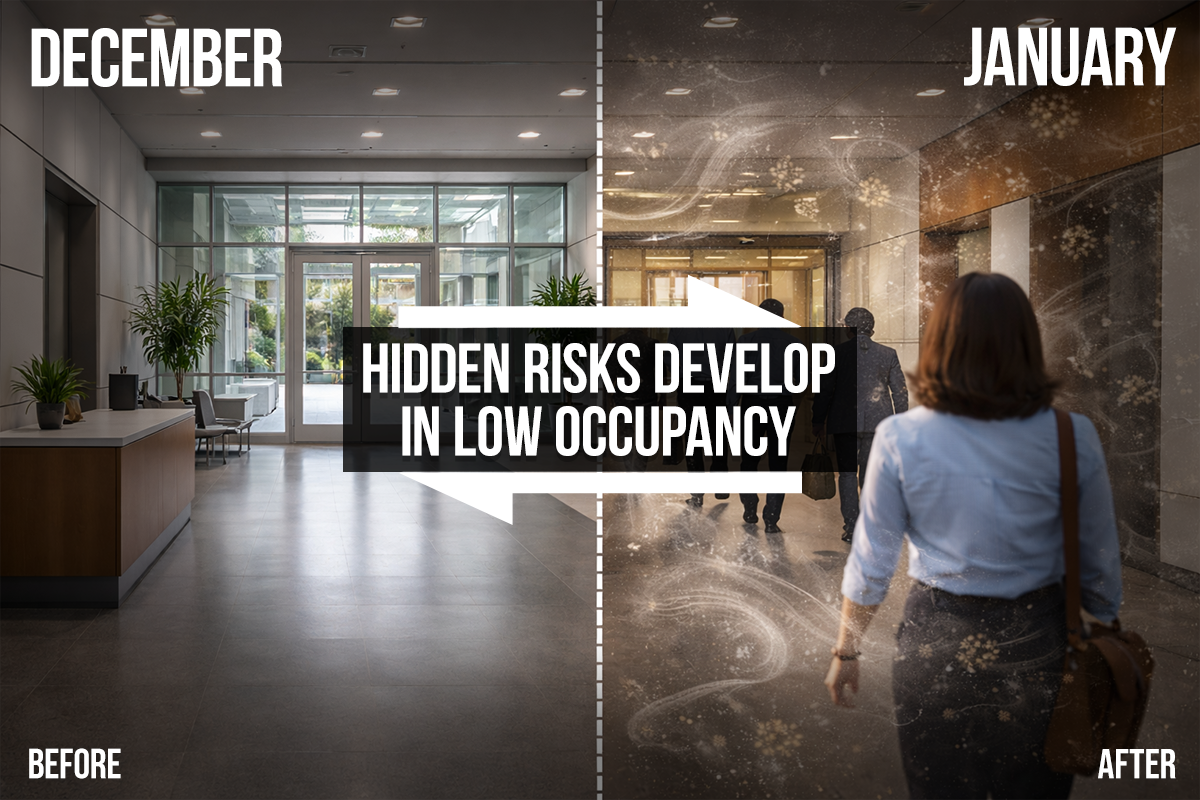
December is a unique time for many workplaces, schools, and facilities. Offices close for extended holidays, campuses operate on skeleton schedules, and commercial buildings experience significantly reduced occupancy. While these pauses are often planned and welcomed, they can quietly create building shutdown environmental risks that remain unnoticed until occupants return in January.
Low occupancy does not mean low risk. In fact, reduced activity can allow indoor environmental issues to develop beneath the surface, impacting indoor air quality, comfort, and health when normal operations resume.
Understanding how low occupancy IAQ issues form and how to prevent them is essential for facility managers, administrators, and building owners preparing for the holiday season.
Why Low Occupancy Changes Building Health
Buildings are designed to operate dynamically. HVAC systems circulate air, plumbing systems move water, and daily human activity helps regulate indoor conditions. When occupancy drops for weeks at a time, these systems often slow down or stop altogether.
During holiday facility maintenance gaps, buildings lose the natural checks that keep environmental conditions stable. Without routine airflow, moisture control, and visual oversight, small issues can escalate into larger indoor air quality problems.
Low occupancy periods are not neutral. They actively change how a building behaves.
Environmental Issues That Develop When Buildings Sit Idle
When buildings experience extended shutdowns or reduced use, several environmental risks can quietly emerge.
Common Holiday Shutdown Risks
- Stagnant indoor air
- Rising humidity in unsupervised areas
- Water stagnation in unused plumbing
- Dust accumulation and allergen spikes
- HVAC systems dropping below optimal airflow
These conditions often develop simultaneously, compounding their impact.
Stagnant air allows airborne contaminants to settle and concentrate. Without fresh air exchanges, carbon dioxide, volatile organic compounds, and residual odors can linger.
Rising humidity is common when HVAC systems are set back or shut down. Moisture buildup creates favorable conditions for mold growth, particularly in restrooms, basements, mechanical rooms, and exterior wall cavities.
Water stagnation in unused pipes increases the risk of microbial growth and corrosion. When water systems restart, occupants may be exposed to poor water quality and aerosolized contaminants.
Undisturbed dust and allergens accumulate on surfaces, in carpets, and within HVAC components. Once systems restart, these particles can be redistributed throughout occupied spaces.
HVAC performance drift occurs when systems remain idle or operate below design parameters. Dampers can stick, sensors can drift, and airflow balance can be disrupted.
How These Risks Impact Occupants in January
When employees, students, or tenants return after the holidays, these hidden issues often reveal themselves quickly.
Low occupancy IAQ issues can lead to increased allergy symptoms, respiratory irritation, headaches, and general discomfort. Mold spores and bacteria that developed during shutdowns may become airborne once HVAC systems ramp back up. Dust and allergens that had settled during idle periods are suddenly redistributed.
Facilities may also experience occupant complaints, absenteeism, and productivity concerns during the first weeks of the new year. These outcomes are often preventable with proactive environmental planning.
Preventive Steps Before and After a Holiday Shutdown
Proactive holiday facility maintenance is the most effective way to reduce environmental risks and ensure a smooth return to normal operations.
Before shutdown
- Conduct pre shutdown environmental inspections
- Verify HVAC setback strategies still maintain humidity control
- Flush low use plumbing lines where appropriate
- Identify areas prone to moisture or poor ventilation
After shutdown
- Perform post shutdown IAQ testing before full occupancy
- Assess moisture levels in high risk areas
- Inspect HVAC systems for proper airflow, filtration, and control response
- Address any anomalies before occupants return
These steps help identify issues early and protect both the building and its occupants.
How LAQ EHS Supports Healthy Reoccupancy
LAQ EHS partners with organizations to manage building shutdown environmental risks through science based assessments and practical solutions.
Our services include:
- Pre-shutdown inspections to identify vulnerabilities before buildings go idle
- Post shutdown IAQ testing to evaluate air quality prior to re-occupancy
- Moisture assessments to detect hidden humidity and mold risks
- HVAC performance checks to confirm systems are operating as designed
By addressing environmental conditions before and after low occupancy periods, LAQ EHS helps facilities restart with confidence and clarity.
Q&A: Holiday Shutdown Environmental Risks
What environmental risks develop when a building sits unused during the holidays?
When a building sits unused during the holidays, reduced airflow and system activity can lead to stagnant air, rising humidity, dust accumulation, water stagnation in plumbing, and HVAC performance issues. These conditions increase the risk of poor indoor air quality, elevated allergens, and microbial growth once occupants return.
Preparing Now Prevents Problems Later
Holiday closures are predictable, but their environmental impacts are often overlooked. Addressing low occupancy IAQ issues before they affect occupants is a smart, proactive investment in building health.
With proper planning and expert support, facilities can turn the holiday shutdown into a controlled pause rather than an environmental reset. Contact LAQ EHS today to set up an assessment.