


Introduction
Most property managers and business owners think of mold as a warm-weather problem; something that follows summer storms or hurricane season. However, winter mold risks are just as real, and in some cases, more insidious. When temperatures drop, buildings tighten up to conserve heat, ventilation decreases, and hidden humidity pockets form. These conditions create a perfect environment for mold growth inside commercial spaces.
At LAQ EHS, we specialize in mold assessments, indoor moisture assessment, and environmental consulting to help businesses prevent contamination all year long, especially when it’s least expected.
Why Mold Appears in Cooler Months
During winter, energy-saving measures and heating systems can unintentionally create environments favorable for mold.
Here’s why:
- Reduced ventilation: Closed windows and sealed doors trap moisture and stale air, preventing proper circulation.
- Humidity pockets: HVAC systems can cause condensation in ducts, ceilings, and walls.
- Temperature variations: Warm indoor air meeting cold exterior surfaces leads to condensation, which can be (depending on the location of the condensation) an invisible source of moisture.
Even in low-humidity climates, small leaks, damp basements, or overworked heating units can push indoor relative humidity above safe levels. Without an indoor moisture assessment, these hidden microclimates can easily lead to mold contamination.
Top 3 Winter Mold Triggers in Workplaces
- Poorly maintained HVAC systems
- Dust and condensation in ducts can spread spores throughout the building.
- Closed-up building envelopes
- Minimal airflow and trapped humidity provide ideal mold conditions.
- Hidden leaks and condensation
- Dripping pipes or cold window frames can harbor unseen mold growth.
Signs Your Building Could Be at Risk
Mold in commercial buildings can stay hidden for months, but early signs can help prevent widespread damage:
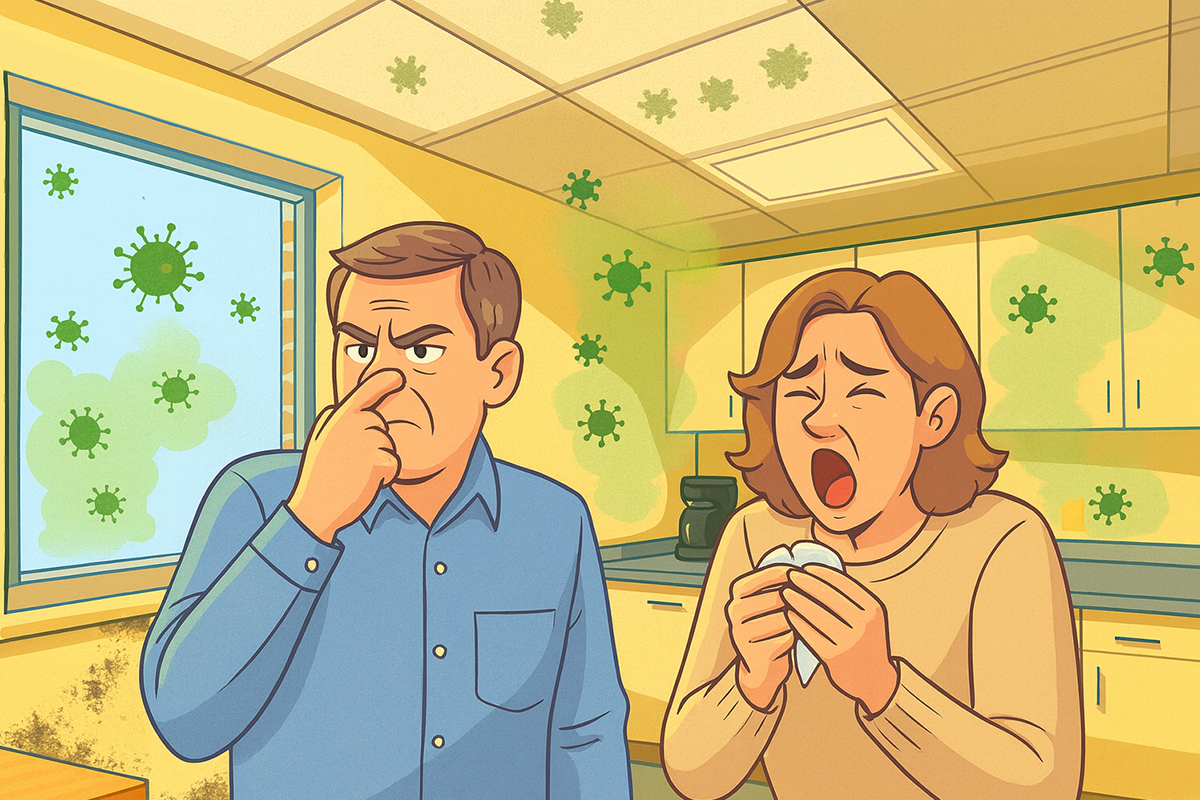
- Musty odors, especially near vents or break rooms
- Discoloration or dark spots on ceiling tiles and drywall
- Increased employee allergy complaints or respiratory irritation
- Condensation forming on windows or HVAC grilles
If you notice any of these warning signs, it’s time to schedule a professional indoor moisture assessment and air quality inspection.
When to Call an Environmental Specialist
Don’t wait until visible mold appears — by then, contamination has often spread behind walls and into HVAC systems. Contact LAQ EHS if:
- You suspect moisture issues in older or recently renovated buildings
- HVAC inspections reveal condensation or biological growth
- You’ve had prior water damage or slow leaks during winter months
Our environmental specialists use advanced moisture meters, infrared imaging, and laboratory air sampling to detect and document mold contamination sources quickly and accurately.
Q&A: Can Mold Grow in Commercial Buildings During Winter?
1. Can mold really grow when it’s cold outside?
Yes. Mold doesn’t rely on outdoor temperatures — it thrives on indoor humidity and organic materials. As long as interior spaces remain warm and moist, spores can grow even in freezing weather.
2. Why are winter HVAC systems linked to mold problems?
Heating systems can cause condensation in ducts and around vents. When combined with dust and organic debris, this moisture becomes an ideal growth medium for mold in commercial buildings.
3. What’s the best way to prevent mold during winter?
Schedule a professional indoor moisture assessment and ensure your HVAC systems are properly maintained. Keep humidity between 30–50% and address leaks immediately.
Conclusion
Even when the weather turns cold, mold in commercial buildings remains a real concern. Winter brings new risks — sealed interiors, hidden condensation, and neglected ventilation systems. By partnering with LAQ EHS, you can take proactive steps through mold assessments, moisture assessments, and indoor environmental testing to protect your property, your staff, and your bottom line all year round.